
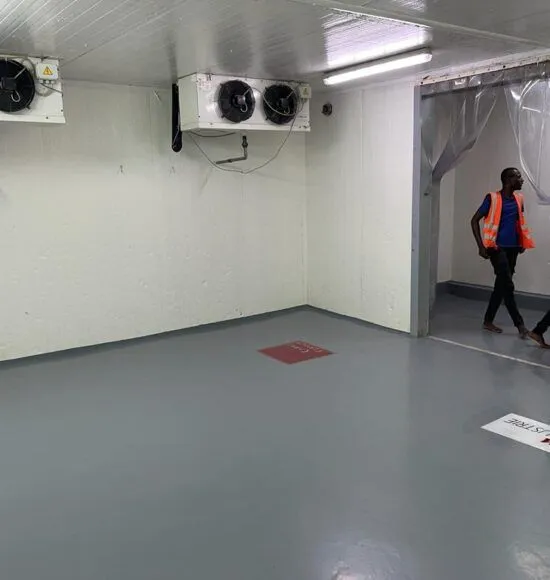
Walk-in coolers and freezers create one of the most demanding transition points in a commercial kitchen. Employees, carts, racks, and ingredient containers repeatedly cross the same narrow doorway while the floor moves between colder interior conditions and warmer surrounding areas. Moisture can also collect near thresholds as doors open, products move, and cleaning takes place. Because these stresses are concentrated in a small area, cooler entrances often deserve a flooring strategy that differs from the broader kitchen floor.
Temperature Changes Concentrate at the Threshold
The inside of a walk-in cooler may remain cold while the surrounding kitchen operates at a much warmer temperature. Every time the door opens, the threshold sits between those two environments.
This repeated temperature difference can place stress on unsuitable flooring materials. Hot-water cleaning in the surrounding kitchen can add another sudden temperature change. Managers should therefore tell flooring contractors how the cooler is operated and cleaned rather than treating the doorway as an ordinary traffic zone.
Condensation Can Change Surface Conditions
Cooler entrances may become damp because of condensation, tracked moisture, or frequent cleaning. Even when the rest of the kitchen is relatively dry, the threshold can experience repeated wetting.
Facilities considering Commercial Kitchen Epoxy Flooring In Green Brook should observe whether water collects near cooler doors and how quickly the area dries. Persistent moisture may point to drainage, door-seal, or floor-slope issues that need attention separately from the coating itself. A resinous floor can create a continuous surface, but it cannot correct every source of standing water.
Carts Create Repetitive Impact
Walk-in coolers are rarely accessed only by foot. Ingredient carts, sheet-pan racks, dollies, and other wheeled equipment cross the threshold throughout the day. Small elevation differences or chipped concrete can create repeated impact as wheels move between rooms. Over time, a minor defect can become larger because the same narrow route receives concentrated traffic.
Before resurfacing, managers should inspect threshold edges, joints, old patches, and any change in floor level between the cooler and surrounding kitchen.
Door Hardware Can Complicate Detailing
Cooler doors often include frames, gaskets, metal thresholds, or other components that interrupt the floor surface. These details can make mechanical preparation more difficult than in open areas.
The contractor should determine how the new flooring system will meet existing door components without creating weak edges or interfering with door operation. Old sealants or deteriorated repairs may need removal before the new resinous layers are installed. Careful detailing is particularly important because the doorway remains one of the most frequently crossed parts of the room.
Texture Needs a Practical Balance
A cooler threshold can become wet, so traction matters. However, very aggressive texture may make the area harder to clean and can create resistance for small cart wheels.
When evaluating Epoxy Flooring For Kitchen In Usa, operators should think about employee footwear, wheeled equipment, condensation, cleaning tools, and spill frequency together. The ideal profile should provide practical grip while still allowing carts to move smoothly and staff to remove food debris efficiently.
The cooler interior and the surrounding kitchen may not need the same texture.
Preparation Must Address Both Sides
A doorway can connect two concrete surfaces with different histories. The cooler may contain an older coating or patch, while the kitchen side may have been resurfaced more recently.
Mechanical preparation should account for both conditions. Weak concrete, contamination, loose coatings, and damaged repairs should be addressed before primers or build layers are applied.
If the threshold itself contains metal or another material, the interface should be evaluated as part of the complete flooring detail rather than treated as an afterthought.
Maintenance Should Focus on the Doorway
Because cooler entrances experience concentrated temperature, moisture, and traffic, they deserve routine inspection after installation. Managers should look for chipped edges, open transitions, persistent dampness, worn texture, or changes around door frames. Staff members who move carts through the doorway every day can often identify developing roughness before it becomes obvious during a general floor inspection. Early attention can make localized maintenance easier.
Conclusion
Walk-in cooler and freezer doorways combine temperature changes, moisture, wheeled traffic, and construction details within a very small area. Those conditions make them different from both the cooler interior and the surrounding kitchen.
A stronger flooring plan begins by inspecting the threshold, understanding water movement, evaluating cart traffic, and preparing both sides of the transition properly. Suitable resin chemistry, practical texture, careful door-frame detailing, and routine inspection can help create a more dependable connection between cold storage and the rest of a commercial food-service operation.