
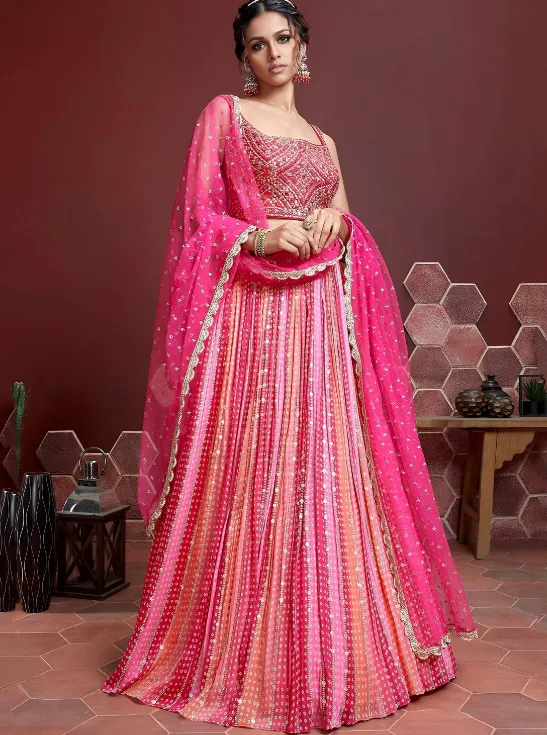
Festive lehengas often become memorable because of contrast. A lehenga choli mirror work design brings sparkle and movement, while softer fabrics can keep that shine from feeling too heavy.
The styling challenge is knowing where to stop. When reflective details, sheer layers, jewellery, and colour are balanced carefully, the outfit can feel festive without becoming visually crowded.
Let Mirror Work Be the Main Texture
Mirror work naturally attracts attention, especially under evening lights. That means the rest of the outfit does not need to compete with it.
If mirrors are concentrated on the blouse, the skirt can stay cleaner. If the skirt carries reflective motifs, a simpler blouse or dupatta can give the design more breathing room.
Placement matters more than quantity. A defined border, scattered motifs, or repeated panel details often create a stronger effect than covering every part of the lehenga.
Use Colour to Control the Sparkle
The base colour changes how noticeable mirror work appears. Dark shades such as black, navy, wine, and bottle green make reflective accents stand out sharply, while pastels create a softer, more romantic effect.
A useful colour plan is to choose one main shade and one supporting accent.
- Black with silver for a cool evening look
- Maroon with antique gold for a richer festive mood
- Ivory with pastel embroidery for daytime functions
- Emerald with mirror accents for wedding events
- Pink with silver details for a softer celebration look
Keeping the palette controlled prevents shine from becoming overwhelming.
Think About the Blouse as a Counterweight
The blouse can either intensify the mirror work or calm it down. A heavily detailed skirt often looks more refined with a blouse that uses smaller motifs, cleaner sleeves, or a simpler neckline.
If the skirt is comparatively plain, the blouse can become the focal point through mirror embroidery, a structured cut, or detailed sleeve work.
The neckline should also leave room for jewellery. When the upper half already contains a lot of reflective detail, statement earrings may be enough.
Bring in Net for Lightness and Movement
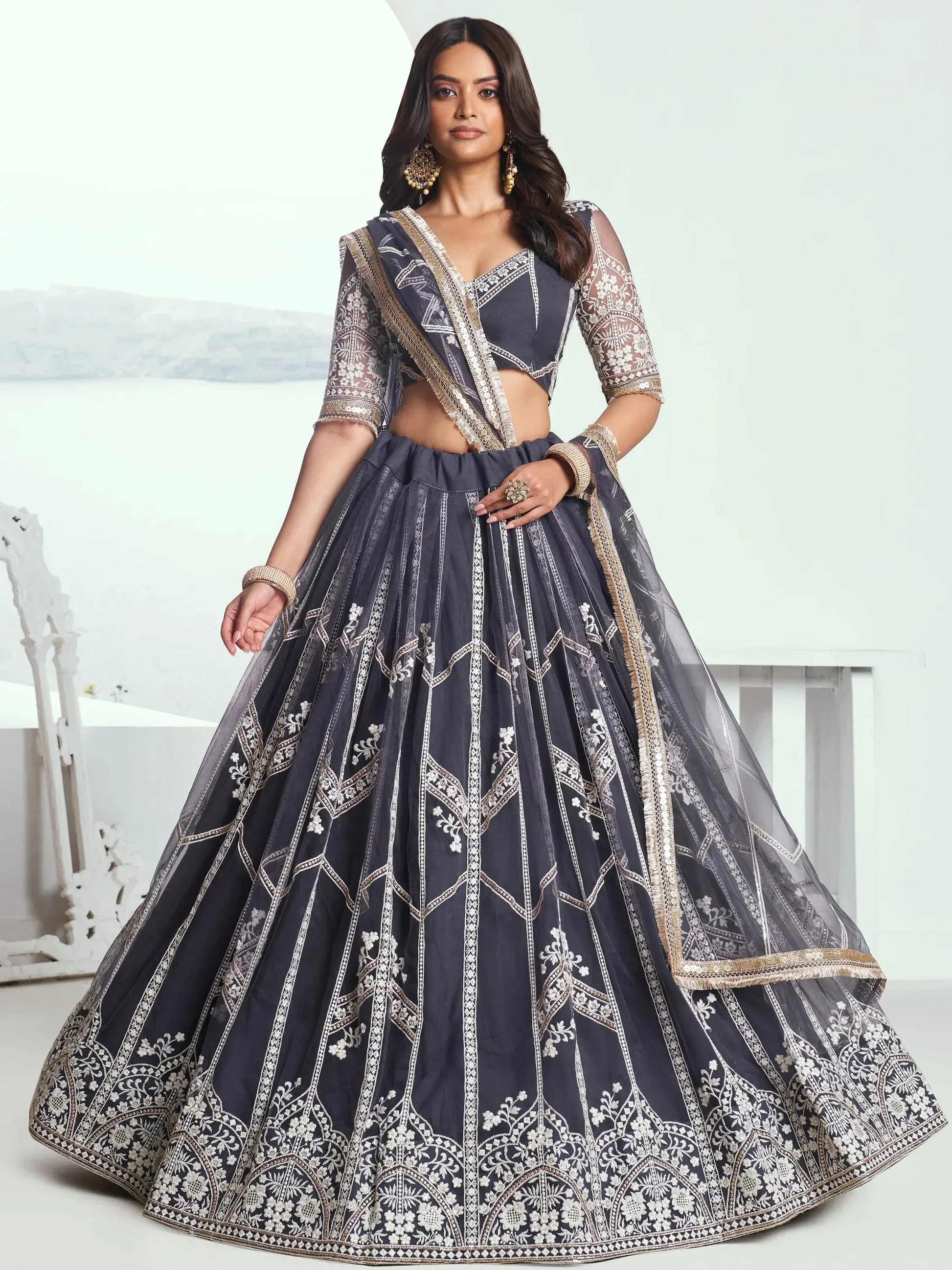
A net lehenga choli with dupatta can create a very different kind of festive texture. Net adds visual softness and volume, especially when layered over a smooth lining or underskirt.
This makes it useful for balancing stronger embroidery. A mirror-work blouse with a softer net skirt, for example, can keep the outfit feeling light while still maintaining occasion-ready detail.
The quality of the lining matters. Net should look airy on the outside without feeling rough or uncomfortable against the skin.
Use the Dupatta to Decide the Final Mood
The dupatta can either continue the sparkle or provide a visual pause. If the blouse and skirt are already detailed, a sheer dupatta with a narrow border often creates better balance than another heavily worked layer.
For a more formal event, a stronger border can add ceremony without covering the main design.
Different draping options create different effects:
- One-shoulder drape for a clean party look
- Front drape for a more traditional finish
- Belted drape for hands-free movement
- Light head drape for ceremonial occasions
- Open pallu-style drape for softer photographs
The drape should remain secure enough for the event you are attending.
Check How the Outfit Reacts to Light
Mirror work and net both change under different lighting. Mirrors become brighter under spotlights, while layered net can appear softer or more transparent depending on the background and venue.
Try the complete outfit in daylight and indoor light before the event. Take a few phone photographs from the front and side.
This helps reveal whether the reflective work looks balanced, whether the lining shows through correctly, and whether the jewellery adds too much extra shine.
Keep Accessories Selective
With two strong textures already present, accessories should have a clear supporting role. Avoid adding a heavy necklace, large earrings, stacked bangles, and a highly embellished clutch all at once.
Choose one focal accessory. A choker can work with an open neckline, while statement earrings may be better with a detailed blouse.
Footwear can stay metallic or neutral. A simple clutch in one shade from the outfit is often enough to complete the look without adding another competing texture.
Final Thoughts
Mirror work and net create very different visual effects, but they can complement each other beautifully. One brings reflection and energy, while the other adds softness, volume, and movement.
The strongest styling comes from controlling where each texture appears. By balancing colour, blouse detail, dupatta weight, lighting, and accessories, a festive lehenga can feel rich without looking overloaded.